
Hellebores (also called Lenten Roses) are the secret weapon of shade gardens. With evergreen foliage and blooms that push through even snow, they bring life to your garden when most plants are still asleep.
-

Bloom late winter–early spring with evergreen leaves
-

Deer and rabbit proof
-

Thrive on neglect + shaded areas


Shop Hybrid Hellebores + Cuttings
-

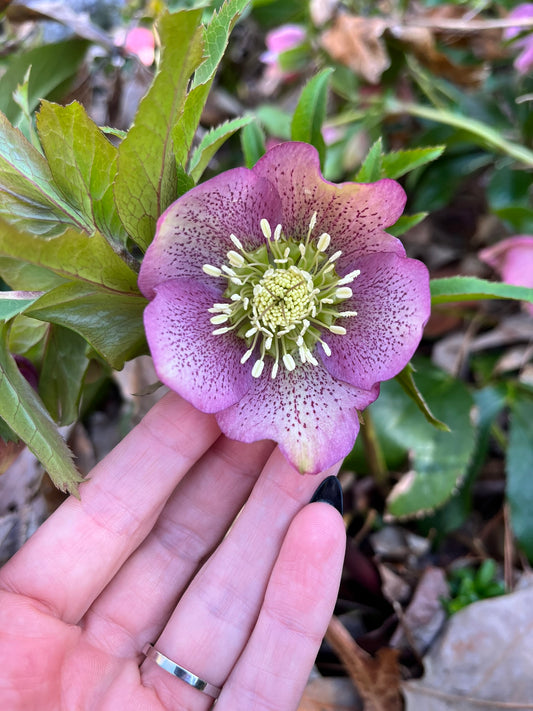 Sale
SaleBare Root Hellebores
Regular price From $59.50 USDRegular price$354.00 USDSale price From $59.50 USDSale -
Hellebore Cut Flowers (Out of Season)
Regular price $119.40 USDRegular price$177.00 USDSale price $119.40 USDSold out -

 Sold out
Seasonal Cut Flowers (Out of Season)
Regular price $29.99 USDRegular price$35.79 USDSale price $29.99 USDSold out



Planting Made Simple
- Soil: Well-draining, mulchy mix (avoid soggy roots)
- Light: Shade to part-shade. Protect from harsh summer sun.
- Zones: USDA 4–9
- Watering: Light drinkers — less is more. They thrive in neglectful conditions.
- Bare Root Plants: Soak 1 hour before planting. Plant immediately, water deeply, and let them adjust for 1–2 weeks.
Low Effort. High Reward.
Pruning
- Heavy prune in early fall when new leaves appear
- Light prune in spring after winter damage
Feeding
- Fertilize in fall & spring only
- Use a slow-release, non-burning fertilizer (we recommend Osmocote)
- Add bloom booster in late fall for showier winter flowers
Longevity
- Perennials that naturalize and spread
- Blooms last up to 8 weeks

Important to Know
- All parts of hellebores are toxic if ingested (pets + people).
- Sap may cause skin irritation — wear gloves when pruning.
- Safe from deer and rabbits, making them a shade garden staple.
Resilient, But Not Invincible
Spider Mites
Rare but tough to treat. Prevent with sprays like Rose RX or garlic-based repellents.
Fungal Issues (Brown Spot / Powdery Mildew)
Trim diseased leaves, sanitize pruners, and treat with fungicide if needed.
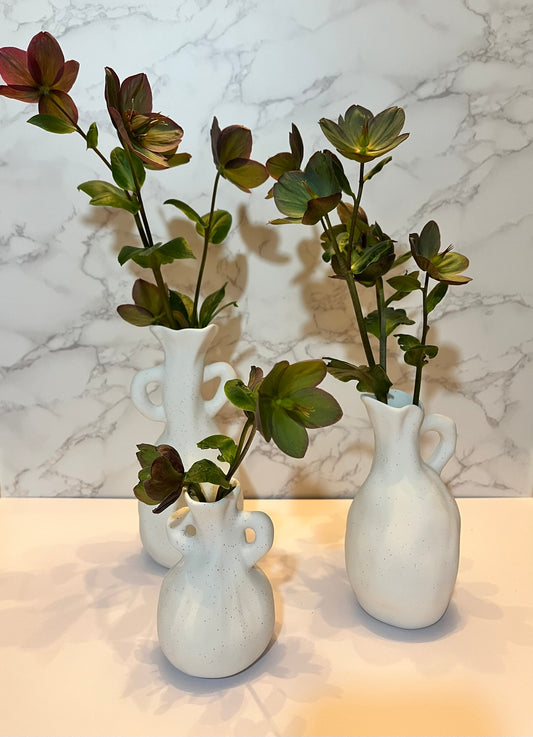
Yes, They Belong in a Vase


Sale
Bare Root Hellebores
Regular price
From $59.50 USD
Regular price
$354.00 USD
Sale price
From $59.50 USD
Sale
One Plant, Endless Personality


Learn & Grow With Us
We’re building a community of hellebore lovers. Follow along for seasonal tips, farm updates, and inspiration.
